Lula Claims Fourth Term in Brazil After Narrow Runoff Victory
The 80-year-old president defeated Senator Flávio Bolsonaro by 4.3 million votes, reversing a deficit from the first round of the election.
By Cameron Hayes ·
Brazil’s Luiz Inácio Lula da Silva won 51.79% of the vote in the presidential runoff, defeating Senator Flávio Bolsonaro to secure a fourth nonconsecutive term. The 80-year-old leftist secured victory over his far-right rival by a margin of approximately 4.3 million votes. The result was declared just after midnight UK time on Sunday, October 25, 2026.
Lula’s win caps a dramatic reversal in the election cycle that began in early October. In the first round, held at the start of the month, Bolsonaro led the Workers’ Party incumbent. Bolsonaro received 56.1 million votes against Lula’s 53.8 million, or 47.03% to 45.16%. No first-round runner-up in Brazil had won the second ballot since the country returned to democracy in 1985.
Polls tightened in the weeks following the first round, placing the candidates within fractions of a percentage point of each other. Lula’s campaign mobilized voters after a record abstention rate of 21% in the first ballot. Millions of supporters joined a WhatsApp channel dedicated to spreading campaign content. The president, who recently acquired his first smartphone, began posting on Instagram and TikTok, allowing his digital reach to surpass that of his rival.
The Bolsonaro campaign faced a series of scandals during the runoff period. The Brazilian magazine Piauí reported that Flávio Bolsonaro attended a boat party in 2020 during the height of the coronavirus outbreak. The report stated he was accompanied by sex workers and vaccine lobbyists seeking deals with his father’s government. Jair Bolsonaro, the former president and Flávio’s father, is currently serving a 27-year prison sentence for plotting a coup after his 2022 defeat.
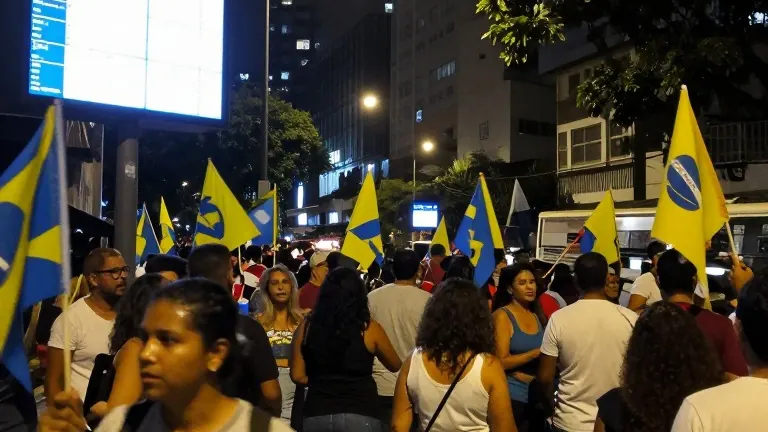
Flávio Bolsonaro refused to concede the election immediately after the results were announced. He cited a decision to extend voting hours by two hours as a reason for his objection, although both campaigns had requested the extension. Lula described the outcome as a defeat for denialism. Supporters gathered in São Paulo and other cities, where fireworks were reported in the background as results were confirmed.
The victory is a birthday gift for Lula, who turns 81 on Tuesday, October 27, 2026. His administration has focused on environmental protection, reducing deforestation in the Amazon by more than 70% since he took office. He also cracked down on illegal mining and supported Indigenous communities in the region. Lula’s win is seen as a consolidation of the country’s democratic resurgence and a rejection of the far-right movement built by the Bolsonaro family.
International leaders have begun congratulating Lula on his victory. The result has global implications for foreign policy, as Lula has positioned Brazil as a defender against what he calls the colonial designs of US President Donald Trump. Trump had imposed 50% tariffs on Brazilian imports last year following his criticism of the trial of Jair Bolsonaro. Lula has rejected an invitation to join a coalition of Latin American countries conducting military operations against drug cartels alongside the Pentagon.
Lula will now govern with a newly elected Congress that includes a record number of right-wing politicians. Many of these legislators are hostile to Indigenous rights and environmental issues. The new administration faces the challenge of continuing its environmental policies while navigating a fragmented legislature. Flávio Bolsonaro is expected to travel to the United States in the coming days to avoid ongoing criminal investigations.
The election result stands alongside other high-stakes votes occurring this week. Israel holds elections on Tuesday, October 27, while the United States goes to the polls next week. Leaders across Latin America and the world have recognized Lula’s win, signaling a shift in the regional political balance. The victory marks the end of a contentious campaign that saw a historic turnaround in Brazil’s democratic process.
Source: The Guardian