Israel Election: Netanyahu and Opposition Face Off
Voters cast ballots in the first Knesset election since the 2023 Hamas attack, with polls showing a tight race and no clear path to a majority.
By Meera Patel ·
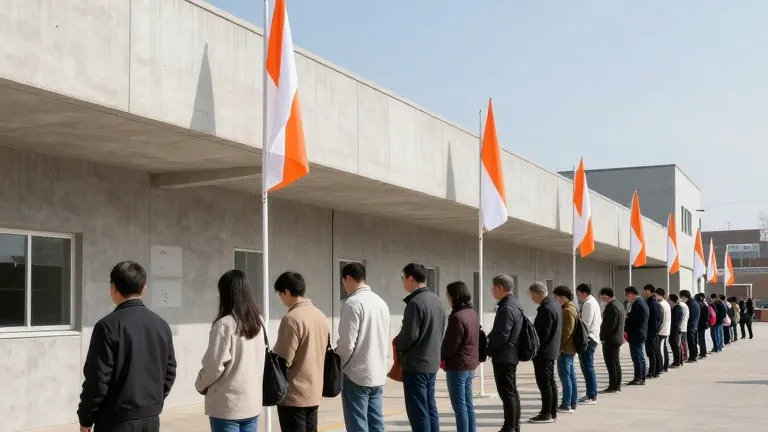
Polling stations across Israel opened at 7:00 a.m. on Tuesday for the country's next Knesset election.
The vote pits Prime Minister Benjamin Netanyahu’s coalition against an opposition bloc led by Gadi Eisenkot’s Yashar party.
This is the first national election held since the Hamas attack on October 7, 2023.
Voting at overseas diplomatic missions ended on October 16, and military personnel began voting on bases last week.
Exit polls are scheduled for release at 10:00 p.m. on Tuesday.
Official results will be finalized in the days following the completion of the vote count.
The Channel 12 poll released on Friday projects Netanyahu’s bloc winning 50 seats.
The same poll projects the opposition bloc winning 56 seats.
Arab parties are projected to take a combined 16 seats.
No bloc is projected to reach the 61 seats needed for a majority without the support of the Arab parties.
Most opposition leaders have pledged against forming a government with the Arab parties.
Eisenkot’s Yashar party is projected to win 22 seats, the highest number of any single party in the race. This leads Netanyahu’s Likud, which is projected to win 19 seats. Likud currently holds 32 seats in the outgoing Knesset. Former Prime Minister Naftali Bennett’s B’Yachad party is projected to win 14 seats. Voter turnout will determine how many votes a party needs to cross the 3.25% electoral threshold. At a 70% turnout, similar to 2022, a party needs 165,635 votes to enter the Knesset. The required vote count increases as turnout rises. Small parties, including Ofer Winter’s People of Israel and Yoaz Hendel’s the Reservists-Economics, are fighting to clear this threshold. Police announced on Monday that approximately 20,000 officers, Border Police, and volunteers will be deployed on Election Day. These forces will be stationed at polling stations and in surrounding areas. The police aim to safeguard the integrity of the elections and ensure the democratic process is conducted properly and in accordance with the law.
Source: The Jerusalem Post